Best Questions Patients Ask About Gum Disease Treatment

Anyone who treats gum disease for a living hears the same pattern over and over. A patient comes in because their gums bleed when they brush, or because a hygienist has mentioned pockets, bone loss, or early periodontitis. Very often, what they really want is not a lecture on plaque. They want honest answers to practical questions. How serious is this? Can it be reversed? Will treatment hurt? What will it cost me in time, money, and future dental work?
Those are the right questions.
Gum disease treatment is rarely just one appointment or one procedure. It is a mix of diagnosis, professional care, home care, follow-up, and long-term maintenance. Some cases are mild and respond quickly. Others are more advanced and need careful management over years. The best patient questions cut straight to the issues that actually affect outcomes, comfort, and expectations.
“Do I really have gum disease, or is this just sensitive gums?”
This is often the first meaningful question, and it matters because many people assume bleeding is normal. It is not. Healthy gums do not regularly bleed when you floss or brush. If they do, there is usually inflammation somewhere in the picture.
That said, not every sore or tender gumline means established periodontal disease. There is a difference between gingivitis and periodontitis. Gingivitis is inflammation limited to the gums. Periodontitis means the inflammation has progressed deeper, affecting the tissues and bone that support the teeth. In simple terms, gingivitis can usually be reversed. Periodontitis can be controlled, but lost bone support does not typically grow back on its own.
A proper diagnosis depends on more than a quick glance. Dentists and hygienists look at pocket depths around each tooth, bleeding points, tartar buildup below the gums, gum recession, mobility, and X-rays that show the level of bone support. A patient with puffy, bleeding gums and no bone loss has a very different situation from a patient with 5 to 7 millimeter pockets and visible bone changes on radiographs.
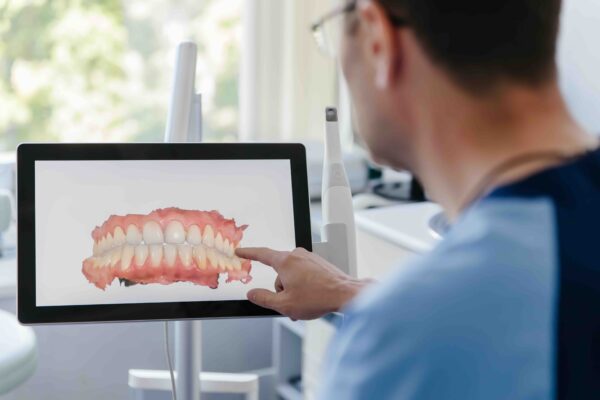
One of the most useful questions a patient can ask is, “Can you show me where the problem is?” When clinicians point out bleeding sites, pocket readings, or areas of bone loss on an X-ray, the diagnosis stops feeling abstract. It becomes visible and easier to understand.
“Can gum disease be reversed?”
The short answer is yes for gingivitis, no in the strict sense for periodontitis, though that answer needs context.
If the condition is gingivitis, treatment combined with improved home care often leads to excellent recovery. The gums can tighten up, redness can fade, and bleeding can stop within days or weeks. Patients are often surprised at how quickly the tissue responds once bacterial plaque is removed thoroughly and consistently.
If the diagnosis is periodontitis, the goal changes. Instead of reversal, the goal is control. That means reducing bacterial load, calming inflammation, shrinking pockets where possible, and protecting the remaining bone and attachment. In some situations, regenerative procedures can help restore some support in selected areas, but this is not the same as turning the clock back completely.
This distinction matters because false reassurance does real harm. Patients deserve clarity. If the disease is early, that is good news, but it still needs attention. If it is moderate or advanced, that does not mean hopeless. It means treatment needs to be more deliberate, and maintenance becomes part of life.
“How did this happen if I brush every day?”
This is one of the most revealing questions because it opens the door to nuance. Brushing every day is important, but gum disease is not only about whether a toothbrush touches the teeth. Technique, timing, anatomy, medical history, genetics, smoking, dry mouth, medications, stress, and missed areas between teeth all play a role.
A patient may brush twice a day and still have persistent inflammation because they never clean between molars. Another may have crowded lower front teeth that trap plaque below the gumline. Someone with diabetes may have more severe gum inflammation with the same level of plaque another person would tolerate better. Smokers sometimes show less bleeding, which can make the disease look quieter than it is, while the actual damage progresses.
There is also the issue of tartar. Once plaque hardens into calculus, a toothbrush cannot remove it. If that tartar sits under the gums, it becomes a rough surface that collects more bacteria and keeps the tissue inflamed. Many patients do a decent job at home but have gone too long between professional cleanings, especially in areas they simply cannot reach.
This is where a good clinician’s judgment matters. Blame is not helpful. Specificity is. Telling someone, “Your lower front teeth trap tartar behind them, and your flossing technique misses the back molars,” is useful. Telling them, “You need to brush better,” is not.
“What exactly is gum disease treatment going to involve?”
Patients usually ask this because they want to know whether they are facing a routine cleaning or something much more involved. The answer depends on severity.
For mild inflammation confined to the gums, treatment may be a professional cleaning with focused home care instruction and an earlier recall. For periodontitis, the first phase of Gum Disease Treatment often involves scaling and root planing, sometimes called deep cleaning. This means cleaning plaque, bacteria, and tartar from above and below the gumline, smoothing root surfaces so the tissue can heal more effectively.
That is not a cosmetic cleaning. It is a therapeutic procedure. Depending on the amount of buildup, the number of affected areas, and the patient’s comfort level, it may be completed in sections with local anesthetic. Some offices use irrigation, localized antibiotics, or adjunctive therapies in selected cases, though these are additions, not substitutes for careful mechanical cleaning.
After healing, the tissue is reassessed. Pocket depths may improve. Bleeding may decrease dramatically. Some sites may stabilize well enough for maintenance care alone. Others may still have deep pockets or difficult anatomy that require referral to a periodontist. In advanced cases, surgery may be recommended to gain access to deep deposits, reduce pockets, reshape tissue, or support regeneration in specific defects.
One of the best signs in a patient consultation is when someone asks, “What part of this is essential, and what part is optional?” That question shows they are trying to understand treatment, not just agree to it out of pressure. Good care should always distinguish the core treatment from the extras.
“Will it hurt?”
Patients ask this quietly sometimes, even when what they really mean is, “How bad is this going to be, and how much should I dread it?”
Most nonsurgical gum disease treatment is very manageable. If scaling and root planing is needed, local anesthetic is commonly used and usually makes the procedure tolerable. During the appointment, patients often feel pressure, water, vibration, and scraping more than sharp pain. Afterward, some soreness, sensitivity to cold, or tenderness while brushing is normal for a few days. If the gums were very inflamed to begin with, some people actually feel relief once the area is cleaned.
The degree of discomfort tends to track with the degree of inflammation. Healthier tissues bleed less and recover faster. Severely inflamed tissues can feel raw for a short period, especially once the tartar that was physically occupying space under the gums is removed and the tissue begins to tighten.
An honest clinician does not promise “painless” treatment. That word sets up mistrust. It is better to say that treatment is typically very manageable, numbing is available, and post-treatment soreness is usually mild to moderate and temporary. Patients appreciate realistic reassurance.
“How long does it take to heal, and when will I notice a difference?”
Healing does not happen all at once. There are usually several timelines moving together.
Bleeding with brushing may improve within days if home care is good. Gum tenderness often settles within a week or two after treatment. Pocket measurements and tissue tone are usually reassessed several weeks later because the gums need time to shrink, reattach where possible, and show their new baseline.
What patients notice first is often small but encouraging. Their toothbrush is not pink in the sink anymore. Their breath improves. Their gums feel less puffy. Food stops packing into inflamed areas as easily. These are practical markers, and they matter because they help patients stay engaged.
More advanced disease takes longer to stabilize. If there has been significant bone loss, mobility, or bite trauma, improvements can be partial rather than dramatic. That does not mean treatment failed. It means the disease had already done structural damage before care began.
“Will I lose teeth?”
This is the question many patients are afraid to ask directly. It deserves a careful answer.
Not everyone with gum disease loses teeth. In fact, many people keep affected teeth for years or decades with the right treatment and maintenance. But the risk is real when support has been badly compromised, infection remains active, or a patient cannot maintain the area predictably.
The answer depends on several factors: how much bone remains, whether the tooth is loose, whether the https://cashnezc227.lumenforgex.com/posts/gum-disease-treatment-for-bleeding-while-brushing roots are shaped in a way that makes cleaning difficult, whether there are fractures or endodontic issues, and whether the patient is likely to attend maintenance visits and clean thoroughly at home. A molar with advanced furcation involvement, for example, presents a different prognosis from a front tooth with moderate recession but good stability.
Patients deserve a plain-language assessment. Terms like fair, guarded, or poor prognosis can sound vague unless they are explained. Sometimes the useful translation is this: “This tooth may last a long time if the gum responds and you maintain it closely,” or, “This tooth has already lost a lot of support, so even with treatment, it may not be predictable long term.”
That kind of directness helps patients make better decisions about whether to invest in saving a tooth, monitor it, or consider replacement planning.
“Do I need antibiotics?”
This question comes up frequently, especially from patients who assume infection automatically means medication. Gum disease does involve bacteria, but treatment is not usually centered on systemic antibiotics. The main problem is bacterial biofilm attached to tooth surfaces and hidden below the gums. That requires physical disruption and removal.
In routine cases, thorough debridement does far more than antibiotics alone ever could. Systemic antibiotics may be considered in selected situations, such as aggressive patterns of disease, acute spreading infections, certain medical risks, or cases managed by a specialist with a specific protocol. Local antibiotic agents placed into pockets may also be considered in some offices for targeted sites.
Patients should be skeptical of any plan that leans heavily on medication without first addressing the physical source of the problem. Antibiotics can support care in selected cases, but they are not a substitute for actual periodontal treatment.
“What can I do at home that truly makes a difference?”
This is one of the most important questions in the whole conversation, because long-term success depends heavily on what happens between appointments.
Home care does not need to be fancy, but it does need to be consistent and specific to the patient’s mouth. A soft toothbrush or electric brush, careful daily cleaning between the teeth, and attention to areas where plaque accumulates predictably can change the course of the disease. For some people, floss works well. For others, interdental brushes are far more effective, especially where there are open spaces from recession. Antimicrobial rinses may help in some cases, but they are not the foundation.
The common mistake is assuming that more force equals better cleaning. It usually does not. Aggressive brushing can irritate tissues and contribute to recession without removing plaque effectively at the gumline. The right method is controlled, thorough, and repeated every day.
Patients often benefit from asking for a personalized demonstration, not generic advice. “Can you show me which areas I am missing?” is a better question than “What mouthwash should I use?” Most people improve fastest when they know exactly where their weak spots are.
“How often will I need to come back?”
After active treatment, many patients move into periodontal maintenance rather than standard six-month cleanings. That difference matters. Maintenance visits are designed for mouths with a history of gum disease. They usually happen every three to four months, though interval decisions vary based on risk and stability.
Why the shorter interval? Harmful bacteria recolonize over time, and patients who have already demonstrated susceptibility to periodontal disease often need more frequent disruption of that cycle. Waiting six months can be perfectly reasonable for a healthy low-risk patient and far too long for someone with deep pockets, heavy tartar buildup, diabetes, or a smoking history.
A practical way to explain it is that treatment is not finished when the deep cleaning ends. That first phase reduces disease activity. Maintenance is what helps keep it from quietly rebuilding.
“Is surgery always necessary if the disease is advanced?”
No, but sometimes surgery is the most sensible next step.
Some patients respond surprisingly well to nonsurgical therapy. Pockets shrink, bleeding resolves, and difficult areas become maintainable. Others are left with deep residual pockets, especially around molars or in areas with complex root anatomy. In those cases, surgery may allow direct access for better cleaning, improved contour, or regenerative treatment in defects where that approach is appropriate.
Surgery is not recommended simply because a chart has a big number on it. It is recommended when the likely benefit is meaningful and the site is not predictable with simpler care alone. Patients should ask what problem the surgery is meant to solve. Is it access? Pocket reduction? Regeneration? Tissue grafting for recession? The clearer the purpose, the easier it is to weigh the recommendation.
“How much does Gum Disease Treatment usually cost, and what affects the price?”
Cost worries are common, and patients often ask late in the conversation when they should ask early. Prices vary widely by region, office, severity, whether a general practice or specialist is involved, whether the treatment is nonsurgical or surgical, and what kind of follow-up is needed. Insurance coverage also varies, sometimes generously and sometimes not enough to reflect the seriousness of the condition.
The more useful question is not just “What is the price?” but “What am I paying for, and what happens if I delay?” A limited case of gingivitis might be relatively straightforward. Advanced periodontitis with multiple quadrants of scaling and root planing, repeated maintenance, localized antimicrobial therapy, extractions, grafting, or implant planning can become a long and costly course of care.
Delaying often raises the eventual cost. A patient who postpones treatment because their gums are “not bothering them” may come back later with abscesses, loose teeth, or restorative problems that would have been far more affordable to prevent than to repair. That is not fear-based messaging. It is the ordinary economics of dental disease.
“If my gums stop bleeding, does that mean I’m cured?”
Not necessarily, though it is a good sign.
Bleeding is one of the easiest markers patients can notice at home, and reduced bleeding usually reflects reduced inflammation. That said, the absence of bleeding does not always equal health. Smoking, for example, can suppress visible bleeding while disease continues. Deep pockets may persist even after symptoms improve. Areas with bone loss can look calm and still need careful maintenance.
The better question is whether the disease is stable. Stability means lower inflammation, shallower or non-progressing pockets, manageable plaque levels, no ongoing attachment loss, and a maintenance plan that the patient can realistically follow. Stability is the win clinicians aim for.
Questions that usually lead to better outcomes
Patients who do well over time tend to ask practical, specific questions rather than broad ones. They want to understand their own risk and their own next steps. A few examples come up again and again:
- Which teeth or areas concern you the most right now?
- What result should we expect after the first phase of treatment?
- What do I need to change at home for this to work?
- How will we know whether the treatment succeeded?
- What happens if I do nothing for six months?
Those questions move the discussion out of theory and into decision-making. They also help reveal whether a treatment plan is being explained thoughtfully or simply presented as a standard script.
When the answer is partly about habits, not just procedures
There is a hard truth about gum disease that many patients appreciate once it is said clearly: treatment can be done to you, but healing requires participation from you. That is not a moral statement. It is just how periodontal disease behaves.
A beautifully performed deep cleaning will not stay successful if plaque piles back up quickly in the same areas. A surgical procedure can create better conditions, but it cannot brush and floss. On the other hand, patients sometimes underestimate how much improvement they can drive themselves once they understand the map of their own mouth. I have seen people with initially discouraging periodontal charts turn things around because they became meticulous with home care and faithful with maintenance. I have also seen mild disease progress because the person assumed one treatment course fixed it permanently.
That is why the best patient questions are not only about fear, pain, or cost. They are also about responsibility. “What part of this outcome depends on me?” is one of the strongest questions a patient can ask.
What a good treatment conversation should feel like
A strong consultation about Gum Disease Treatment should leave the patient more grounded, not more confused. They should understand whether the problem is gingivitis or periodontitis, how severe it is, what treatment is being recommended, what improvement is realistic, and what their role will be afterward. They should know which teeth are stable, which are questionable, and which habits or health factors are making the condition harder to control.
If the conversation stays vague, patients often leave with one of two damaging impressions. Either they think the disease is trivial because nothing hurts, or they feel overwhelmed because everything sounds dire and expensive. Neither reaction helps.
The best questions break through that fog. They force precision. They make room for honest answers, and honest answers are what gum disease treatment needs most.
Dental Group Of Beverly Hills
Address: 8641 Wilshire Blvd #125, Beverly Hills, CA 90211
Phone number: +13109296335
FAQ About Gum Disease Treatment
How to improve gum health quickly?
To improve gum health quickly, eliminate plaque buildup by brushing for two full minutes twice a day at a 45-degree angle to the gumline. Floss daily to clean under the gumline, and rinse with an antimicrobial, alcohol-free mouthwash. For immediate relief of soreness, use a warm saltwater rinse.
What is the fastest way to cure gum disease?
To quickly cure early-stage gum disease (gingivitis), eliminate the plaque buildup causing the inflammation. Brush gently but thoroughly for two minutes twice daily, floss daily, and use an antibacterial mouthwash or a warm saltwater rinse. However, if tartar has hardened, professional treatment is necessary.
How do I treat my gum disease at home?
You can treat early gum disease at home by practicing strict daily oral hygiene, rinsing with salt water or antibacterial mouthwash, and quitting smoking. True gum disease (especially advanced forms like periodontitis) cannot be fully cured at home once tartar forms, and you must see a dentist for professional cleanings.